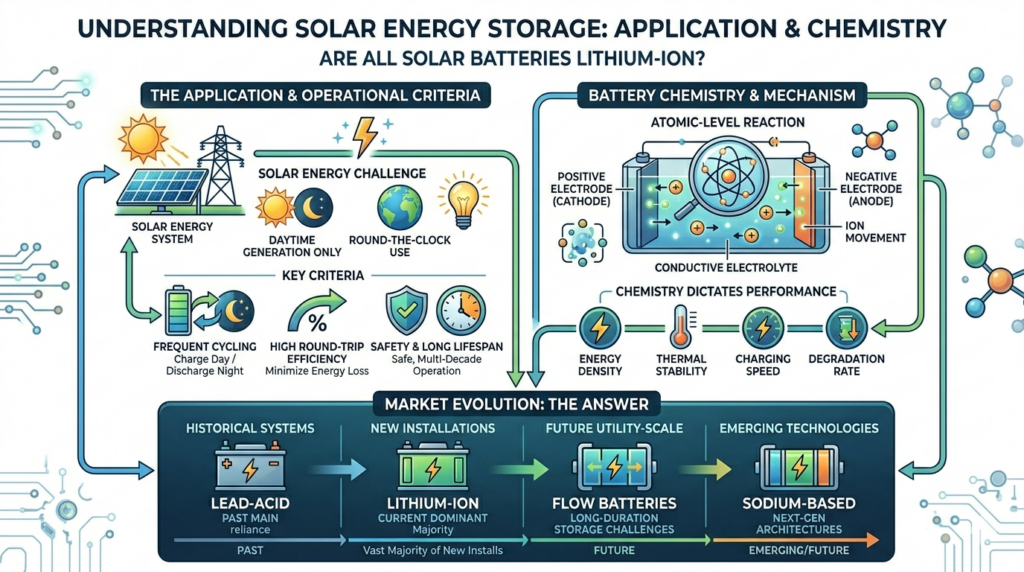
Meta Description: Discover the best lithium ion battery for solar systems, compare LiFePO4, NMC, NCA & LCO options, explore off-grid use cases, recycling facts, and UK grants. Expert insights for homeowners.
Abstract
Introduction
Key Lithium Ion Battery Types for Solar: Comparison Table
| Battery Type | Full Name | Energy Density (Wh/kg) | Cycle Life (Cycles @ 80% DOD) | Safety Rating | Operating Temperature Range | Cost (USD/kWh) | Best Solar Application |
|---|---|---|---|---|---|---|---|
| LiFePO4 (LFP) | Lithium Iron Phosphate | 120–160 | 4,000–6,000 | Very High (Low fire risk) | -20°C to 60°C (-4°F to 140°F) | $150–$250 | Off-grid homes, grid-tied backup, long-term storage |
| NMC | Nickel Manganese Cobalt | 180–220 | 1,000–2,000 | Medium (Moderate thermal risk) | 0°C to 45°C (32°F to 113°F) | $200–$300 | Portable solar stations, RVs, short-term backup |
| NCA | Nickel Cobalt Aluminum | 200–260 | 2,000–3,000 | Medium-Low (Higher fire risk) | -10°C to 50°C (14°F to 122°F) | $250–$350 | EVs, commercial solar farms, high-demand backup |
| LCO | Lithium Cobalt Oxide | 150–200 | 500–1,000 | Low (High fire risk) | 0°C to 40°C (32°F to 104°F) | $180–$280 | Consumer electronics (not recommended for solar) |
Key Takeaways from the Table:
- LiFePO4 (LFP) leads in cycle life and safety, making it the top choice for most solar homeowners.
- NMC offers higher energy density but shorter lifespan—ideal for portable or temporary solar setups.
- NCA excels in energy density but comes with higher costs and safety risks, limiting residential use.
- LCO is unsuitable for solar due to poor cycle life and safety concerns.
Which Lithium Ion Battery Is Best for Solar? The Verdict
1. Unmatched Safety for Home Use
2. Long Lifespan = Lower Long-Term Costs
3. Extreme Weather Performance
4. Low Maintenance & Deep Discharge Tolerance
World Case Studies: LiFePO4 in Action
Case Study 1: Off-Grid Family Home in Scotland
Challenges: Cold winters (-15°C/5°F), frequent power outages, and high energy demand (HVAC, electric vehicles, household appliances).
Results: The LiFePO4 battery maintained 95% capacity in winter, powering the entire home for 3 days without sunlight. After 5 years of use, the battery still retains 90% of its original capacity. The family reduced energy costs by 100% (no grid bills) and qualified for the UK’s Smart Export Guarantee (SEG) for excess energy exported to the grid.
Quote: “We chose LiFePO4 for safety and longevity—our battery has survived blizzards and heatwaves without issue. It’s the best investment we’ve made for our off-grid lifestyle.” — Sarah M., Scottish Highlands homeowner.

Case Study 2: Grid-Tied Home with Backup in London
Challenges: Grid outages due to storms, high peak-hour electricity rates (15–20p/kWh), and a goal to reduce carbon footprint.
Results: During a 24-hour grid outage in 2024, the LiFePO4 battery powered lights, fridge, Wi-Fi, and a home office. The battery stores excess solar energy during the day, reducing peak-hour grid usage by 70% and cutting monthly bills by £80. The system qualified for the London Energy Efficiency Fund grant, covering 30% of installation costs.
Quote: “LiFePO4 was the clear choice for backup power—we never worry about blackouts now. The battery pays for itself through bill savings and grants.” — James K., London homeowner.

Are Solar Batteries Recyclable? What You Need to Know
How Solar Battery Recycling Works
- Collection: Most manufacturers (e.g., BYD, Sonnen) offer take-back programs for end-of-life batteries. In the UK, Recycle Now and local councils partner with specialized facilities to collect solar batteries.
- Processing: Batteries are discharged, disassembled, and shredded. Valuable materials (lithium, iron, nickel) are extracted via mechanical or hydrometallurgical processes.
- Reuse: Recycled materials are used to produce new batteries, reducing the need for raw material mining. LiFePO4 batteries are easier to recycle than NMC/NCA, as they contain no cobalt (a toxic, rare metal).
Key Resource: The Battery Recycling Association (BRA) provides a global directory of recycling facilities—visit their website to find a location near you.
Grants for Solar Battery Storage UK: 2025 Updates
1. Smart Export Guarantee (SEG)
- What it is: A government scheme that pays homeowners for excess solar energy exported to the grid (even if you have a battery).
- Eligibility: Solar system must be MCS-certified; battery must be compatible with SEG.
- Benefits: Tariffs range from 5–18p per kWh, with payments made quarterly.
- Link: Ofgem SEG Guidance
2. Home Energy Scotland Loan
- What it is: Interest-free loans up to £7,500 for renewable energy systems, including solar batteries.
- Eligibility: Scottish homeowners; property must meet minimum energy efficiency standards.
- Benefits: No upfront costs; repayments spread over 10 years.
- Link: Home Energy Scotland
3. ECO4 Scheme
- What it is: Funds energy-saving measures for low-income or vulnerable households.
- Eligibility: Household income below £31,000; property with EPC rating D or below.
- Benefits: Free or discounted solar battery installation.
- Link: GOV.UK ECO4
How to Choose the Right Solar Lithium Ion Battery: Step-by-Step Guide
- Calculate Your Energy Needs: Use a smart meter or energy bill to determine daily kWh usage. For off-grid homes, add 20–30% for backup.
- Prioritize LiFePO4: Opt for a LiFePO4 battery unless you need portable storage (NMC) or extreme energy density (NCA).
- Check Modularity: Choose expandable systems (e.g., Tesla Powerwall, BYD Blade Battery) to add storage as needed.
- Verify Inverter Compatibility: Ensure your inverter matches the battery’s voltage and capacity (e.g., 5–8 kW inverter for 10–15 kWh batteries).
- Leverage UK Grants: Apply for SEG, local loans, or ECO4 to reduce costs.
- Research Manufacturers: Look for brands with 10+ year warranties and positive customer reviews.
Conclusion
- 8000+ Cycle Life: Durable LiFePO4 cells for long-term use
- 5-Year Warranty: Secure, worry-free investment
- Portable & Wall/Floor Mountable: Flexible installation for any home
- 15kWh 48V 300Ah Capacity: Ample power for solar storage & backups
- LED Power Display: Real-time SOC monitoring (0%-100%)
- WiFi/Bluetooth & BMS System: Smart remote control + safety protection