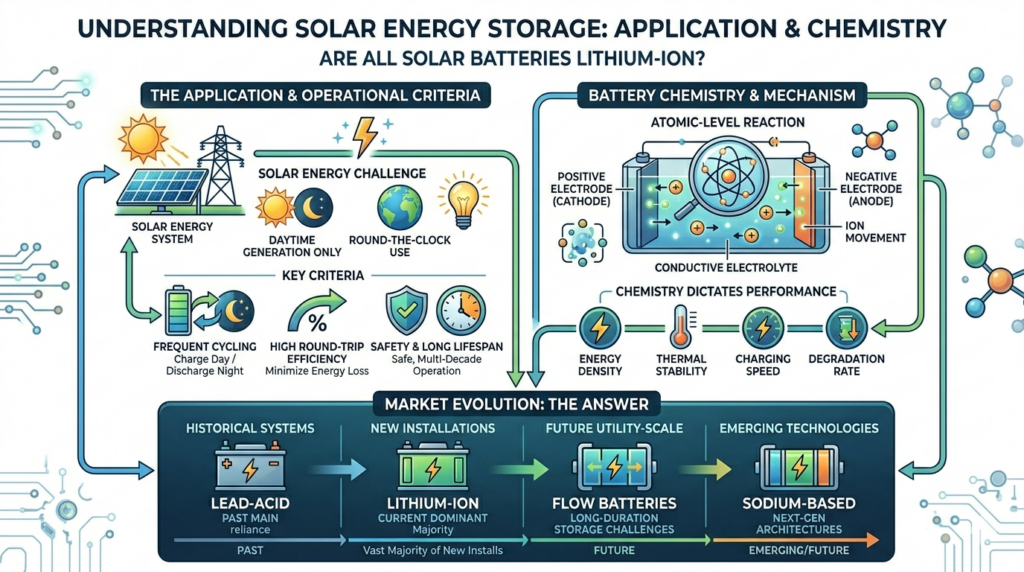
Do LiFePO4 batteries need BMS?
Abstract
Introduction
What does bms mean?
-
Battery Management System: This is the most common technical definition. It is an electronic “brain” that manages rechargeable battery packs (especially lithium-ion) in electric vehicles, smartphones, and solar systems. Its primary jobs are:
- Safety: Preventing overcharging, overheating, and fire hazards.
- Performance: Balancing individual cells to ensure they all charge and discharge evenly.
- Monitoring: Calculating “State of Charge” (how much battery is left) and “State of Health” (how much life is left).
How many LiFePO4 cells do I need for 48V?
Core Calculation Formula
For a 48V system:
Practical Configuration Notes
- Series Connection Requirement: The 15 LiFePO4 cells must be connected in series to achieve 48V. Series connection increases the total voltage of the pack while keeping the capacity consistent with a single cell. For example, 15 pieces of 300Ah LiFePO4 cells in series form a 48V 300Ah lifepo4 battery pack, which can store 14.4kWh of energy—ideal for large household solar energy storage needs.
- Capacity Customization: To increase the total capacity of the 48V pack, multiple 15-cell series groups can be connected in parallel. For instance, two sets of 15-cell 300Ah series groups in parallel create a 48V 600Ah battery pack with a storage capacity of 28.8kWh.
- Product Example: https://jmbatteries.com/ offers a 48V 300Ah LiFePO4 solar battery pack, which is precisely configured with 15 series-connected cells. This product features a built-in smart BMS, supporting up to 8,000 charge-discharge cycles and real-time mobile monitoring.
How to choose BMS for LiFePO4?
| Brand | Voltage Support | Core Smart Features | Best-Suited Scenarios for 48V LiFePO4 Packs |
|---|---|---|---|
| Daly Smart BMS | 12V/24V/48V | Active cell balancing, mobile app remote monitoring, overcharge/over-discharge protection | Household 48V solar battery systems; users who prefer convenient mobile control |
| JBD/Overkill Solar | 12V/24V/48V | PC software data logging, detailed charge-discharge cycle records, temperature monitoring | Professional off-grid 48V setups; users who need to track battery performance long-term |
| ANT BMS | 12V/24V | Multiple temperature sensors, over-temperature automatic power-off, low-cost solution | Small-scale 24V systems; can be expanded for 48V setups with parallel connections |
| Seplos Smart BMS | 12V/24V/48V | High configurability, custom protection parameters, support for large-capacity parallel packs | 48V commercial solar storage systems; large-scale home setups with 600Ah+ capacity |
Key Selection Principles
- Prioritize 48V Compatibility: Ensure the BMS is specifically rated for 48V LiFePO4 systems to avoid voltage mismatch issues.
- Smart Monitoring Functions: Select BMS with cell balancing and temperature monitoring features, as these are essential for preventing cell degradation in 48V packs.
- Match Battery Capacity: For high-capacity 48V 300Ah or 600Ah packs, choose BMS with high current tolerance to support maximum charge and discharge rates.
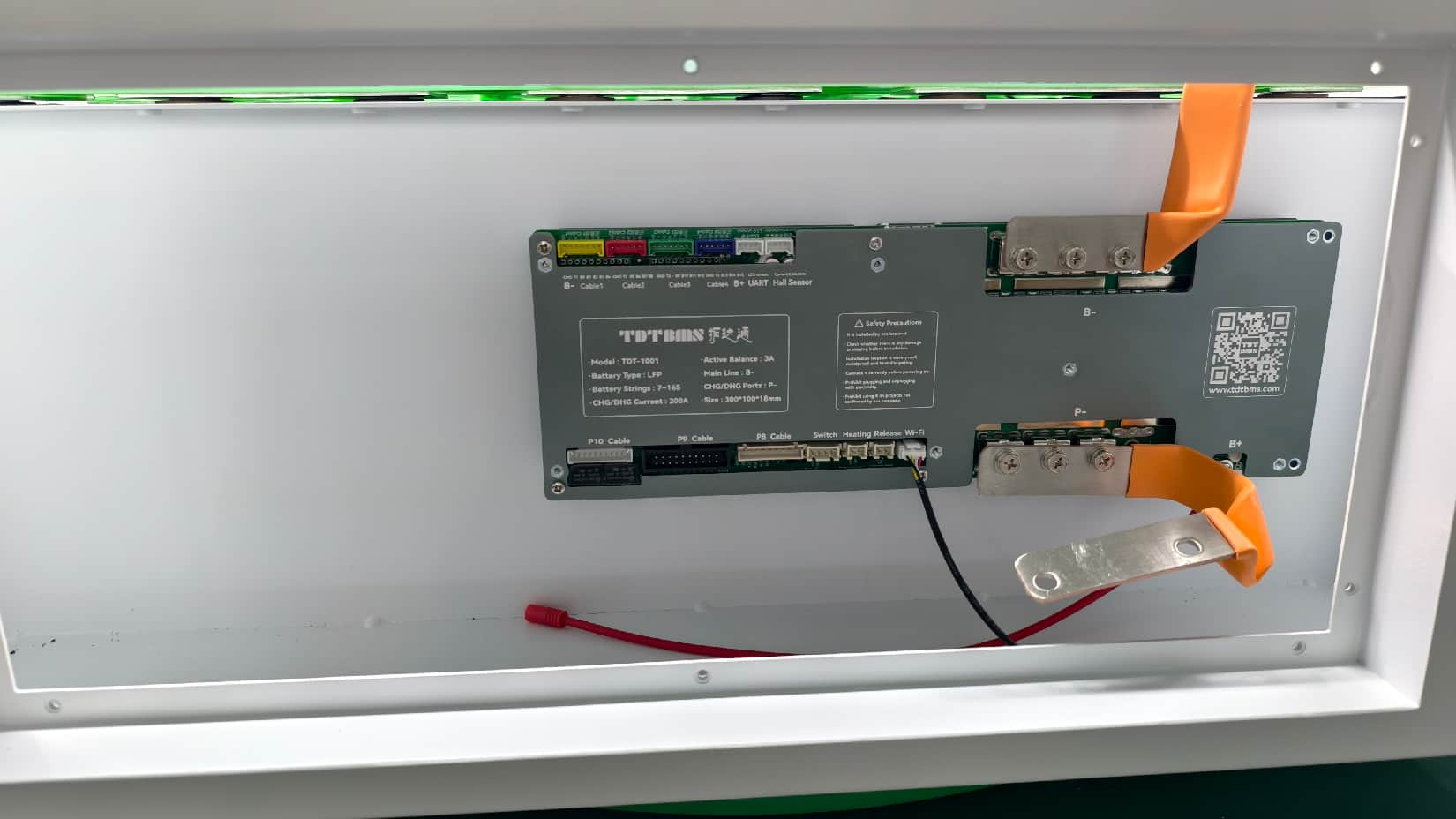
The picture shows the intelligent BMS installed in the household energy storage system. The copyright of the picture belongs to ST Batteries.
How to size BMS for LiFePO4 cells?
Core Calculation Formulas
- Calculate power from voltage and current:
- Calculate current from power and voltage:
Step-by-Step Sizing Process
-
Confirm System Parameters
- Target system voltage: 48V (for lifepo4 battery packs bms 48v setups)
- Total load power: Take a 2,400W inverter (common for household solar systems) as an example
- Inverter efficiency: 90% (mainstream inverter efficiency range: 85–92%)
-
Calculate Actual Input Power (Account for Efficiency Loss)
Inverters consume extra power during energy conversion, so the actual input power from the battery pack is higher than the inverter’s output power.
Formula: Input Power = Inverter Output Power ÷ Inverter Efficiency
Calculation:
-
Convert Input Power to Required BMS Current
Use the formula to get the minimum continuous current rating of the BMS.
Calculation:
-
Add a 20–30% Safety Margin
To handle peak loads (e.g., air conditioner startup) and temperature fluctuations, select a BMS with a current rating 20–30% higher than the calculated value.
Calculation: ;
Final BMS current rating: 70–80A (ideal for this 48V 2,400W inverter setup)
Additional Considerations
- Peak Current Tolerance: Ensure the BMS can handle 2–3 times the continuous current for short periods (10–30 seconds) to support high-power device startup.
- Battery Capacity Matching: For a 48V 300Ah LiFePO4 pack, the BMS current rating should not limit the battery’s maximum discharge current, ensuring full utilization of the pack’s capacity.
Conclusion
ST 51.2V/48V 15kWh 15kW LiFePO4 Lithium Battery for Solar Home System

Core Product Advantages
-
Flexible Installation
Supports movable & wall-mounted installation.
-
Sleek Design
Light bar appearance for easy power level checking at a glance.
-
Customization Services
Touchscreen logo & multi-language customization (OEM/ODM with low MOQ).
-
Intelligent Monitoring
Built-in WiFi, Bluetooth & BMS for real-time SOC and status monitoring.
-
Battery Life
8000 deep charge-discharge cycles, 10 years of normal service life.
-
Capacity Options
15kWh Battery (51.2V 300Ah) & 16kWh Battery(51.2V 314Ah) to meet diverse power needs.
-
Warranty Guarantee
10-year official warranty with free repair/replacement for faults.
Applicable Scenarios
- Energy storage for household solar power systems (self-generation and self-use with PV panels & inverters).
- Household emergency backup power (powers air conditioners, lights, appliances during outages).
- Power supply for small commercial premises (convenience stores, small shops – daily use & emergency backup).
- Off-grid energy systems (rural areas, villas, and areas without grid coverage).